Jayne Morris is a Executive Burnout Coach in the UK, ICF Group Lead, Burnout Coach Trainer & Supervisor. She is the author of the book “Burnout to Brilliance”, and she hosted a MOE Digital Academy on the topic of “How to spot burnout as a coach” which you can watch on MOE’s YouTube Channel. Here’s her story.
Completing coaching training
I first started coaching 18 years ago. I strongly recall the mix of emotions when I first qualified. I was elated after completing my training and excited to get started, yet also overwhelmed trying to seek out the support to make things happen. I wished someone could have provided me access to everything I needed all in one place – it would have saved me a lot of time, and money!
Over the years I have invested in countless business building programmes, participated in multiple supervision groups, been mentored by some of the world’s most successful coaches and completed several high-quality coach trainings. Along the way I have learned what works, what doesn’t work, as well as what is really important.
When you complete your MOE training and begin your business, you are armed with a fabulous set of coaching skills that will forevermore be core to the work that you do as a coach. Beyond these it is also crucial to establish strong foundations in several areas of support, so that you sustain long-term success without burnout.
Whether you have just started coaching or are looking to up-level your coaching business, I’m keen to share my top insights on what makes the biggest positive difference:
Community Support: Coach-to-Coach Connection
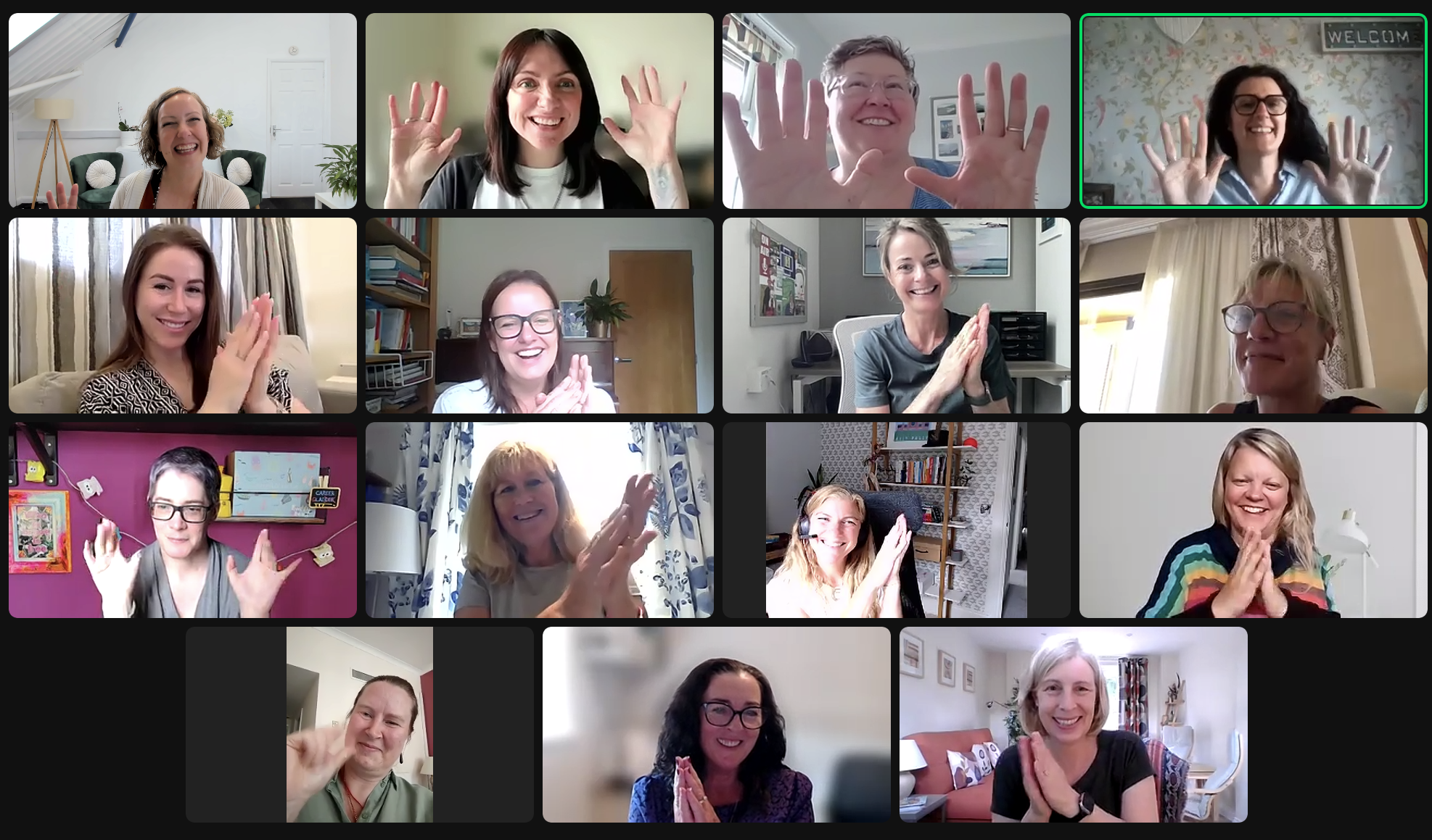
Having people around you who can relate to the passion you have for coaching and the challenges that keep you up at night makes such a difference. Without this you will likely bore the pants off your partner and/or friends and start to feel disheartened. Meeting on a regular basis with other coaches who are on a similar journey and share the same deep desire to make a positive difference in the world, is crucial to keeping you connected to why you do what you do.
You might be speaking to people all day long, but the conversations you have are in service of someone else and the reciprocal sense of camaraderie you most likely experienced in other settings is suddenly absent. Sharing struggles and celebrating successes with other coaches helps combat the loneliness of flying solo.
When I became a coach, I had stepped away from a corporate career in marketing at the BBC. I had found the hustle and bustle of an open office energetically draining and at first, I really enjoyed time on my own. However, soon I missed the sense of being part of a team. At the time when I started coaching there weren’t ready made communities. If there had been, then perhaps I might not have ended up adopting six guinea pigs as surrogate colleagues!
Supervision: Guidance and Restoration
Across the coaching profession, the value of supervision is increasingly being recognised. Leading professional coaching bodies are now requiring coaches to evidence that they have had regular supervision as part of the membership renewal process. This is because supervision is being appreciated for the rich opportunity that it offers for reflective learning, restoration, and growth. You can access supervision in a 1:1 format or as part of a group. Many coaches gain from having a combination of both in place on a regular basis.
Supervision is a structured space to reflect on your practice, discuss difficulties, explore ethical dilemmas, celebrate successes, and gain feedback. It is a safe container where you can bring challenging cases and emotional responses and feel supported, reassured, and resourced.
Top tip: always seek supervision from someone who has qualified as a coach supervisor with a reputable training provider to ensure you receive high quality guidance.
Continuing Professional Development (CPD): Lifelong Learning
At the time when I first discovered coaching, I was burning the candle both ends and unaware I was heading for burnout. During December 2007 I completely crashed over Christmas and experienced chronic fatigue with vertigo, which resulted in me being bed bound for six months. It was not until I came out the other side and recovered my energy, that I recognised I had actually burned out.
My recovery came through a combination of different coaching-based approaches, tools and techniques that I felt inspired to learn more about, so that I could support others to prevent and recover from burnout too. I was especially intrigued to learn more about the potential use of art in coaching and to deepen my somatic awareness as a coach. So, I followed several different training programmes to continue my professional development and create my own unique way of working as a coach.
Over the years I have found coaching to be a truly dynamic field, there is always something more to learn, deepen and integrate. Continuous learning keeps me passionate about what I do, but I also believe it is crucial to stay relevant and effective in our practice by consistently staying across the latest thought leadership, tools, techniques and research. I think this is essential for our ongoing growth as coaches and our ability to support our clients’ continued success.
Business Mentoring: Navigating the Business Side of Coaching
When I started my coaching business, I quickly realised that running a successful business requires and entirely different skill set to coaching. Whether setting up or up-levelling, finding an experienced coach who has successfully run a coaching business to mentor you, can make all the difference. If you want to make a career out of coaching, rather than coaching as a hobby, then a mentor will help you to work smarter, take bolder aligned action and make your dreams reality.
I continue to stretch myself and the potential my business holds by having mentors to challenge me, stress test my ideas and show me tried and tested ways to move things forward. I have especially enjoyed group mentoring alongside other coaches, in supportive spaces where it is possible to share and expand ideas, without fear of competition. I enjoy sharing my learnings, providing steering and asking questions to help coaches focus in on what is most important in their business.

Going for it
How can you start strong, up-level and maintain momentum as a coach? The key is to build-in a solid foundation of support. As a result of investing in each of the key areas outlined above (community support, supervision, CPD and mentoring), you can create a sustainable, successful coaching practice that continues to grow over time. Each of these support areas play a vital role in helping you navigate challenges, stay motivated, and continuously develop both as a coach and as a business owner.
Of course, you can build a support system yourself by bringing together peers and then seeking supervision, mentoring and regular CPD as a group. Many coaching cohorts do this, and it really is worthwhile. However, if you would like an easeful way to access everything you need as part of a ready-made, warm and welcoming community, then do consider becoming part of the Balanceology Coach Hub – we would love to have you join us!
In the Balanceology Coach Hub you’ll get:
- Peer support and a thriving community, creating wonderful coach-to-coach connections
- Coach supervision as part of a monthly pod or 1:1 arrangement, it is also an integrated part of the Balanceology Burnout Coach CPD Training Course.
- A Certified Burnout Coach CPD Training Course, to fully equip coaches wanting to niche in this area or simply looking to better understand how to work empathetically, ethically and effectively when burnout enters the coaching space. We additionally offer other, shorter programmes on a quarterly basis, covering a variety of topics.
- Business mentoring sessions
Save 10% Off the Balanceology Coach Hub
As MOE alumni you are entitled to 10% off your membership with Balanceology Coach Hub if you join by 31st October 2024. There are three tiers to choose from, starting at just £10 per month. Our thriving hub offers monthly Community Connect calls, group Supervision Pods, Business Mentoring, Get Sh*t Done Days, CPD Workshops and so much more!
Visit Balanceology for full details and use voucher code: MOE2024 to qualify for your discount.